Over the course of two dynamic days, Members of the Consortium gathered virtually for an Innovation Lab centered around a critical question: How do we reimagine customer and employee experiences in the age of AI? Through deep conversations, real-world case studies, and collaborative breakout sessions, we explored the evolving role of technology, people, and knowledge in shaping the future of customer engagement.

Themes Discussed
- Customer Experience is Shared Work: Ownership may vary by company, but success depends on cross-functional alignment and clear accountability.
- AI Needs a Strategy: AI isn’t the strategy—it’s the enabler. Planning, piloting, and iterating thoughtfully are what deliver sustainable impact.
- The convergence of knowledge, people, and AI: As AI automates routine tasks, the true opportunity lies in using knowledge management and purposeful automation to elevate human roles toward relationship-building and creative problem-solving.
- Nurture the customer experience: Customers experience the reality of automation initiatives in their interactions, making the voice of the customer a key component of any AI initiative.
- Challenge our assumptions: As more AI capabilities are offered throughout the engagement experience, it’s important to allow the reality of the interaction to shape our expectations and beliefs.
Matt Seaman (Consortium Executive Director) presented insights on the evolving role of AI in support services, emphasizing that automation should serve business outcomes, not replace human value. He highlighted the strategic importance of knowledge management—especially KCS—and called for leveraging AI to enhance customer-defined value while empowering employees to focus on high-impact, relationship-driven work.
Madison Hoffman shared Zendesk’s journey with an AI implementation that encountered a difficult start but set in motion thoughtful strategy realignment, resulting in a new approach to automation and an improved customer experience.
Christina Roosen (Consortium Director of Enablement) introduced members to the AI Blueprint, a three-phase framework—prepare, execute, and iterate—designed to help organizations strategically plan, pilot, and refine AI initiatives. The resource includes real-world use cases and practical guidance for aligning AI efforts with business goals and adaptive organizational principles.
Consortium Members can find the AI Blueprint in the Member Only Wiki.
Carly Thomas shared SAP’s structural “AI Factory” approach to managing AI use cases within its vast technical support organization, including a dedicated innovation pipeline and rigorous evaluation process. She emphasized the value of success metrics in guiding the rollout of an AI capability, using efficiency gains, adoption rates, and user feedback to refine the tool, inform go/no-go decisions, and ensure a transparent, data-driven implementation process.
Attendees gathered in breakout sessions for a deeper dive into these topics:
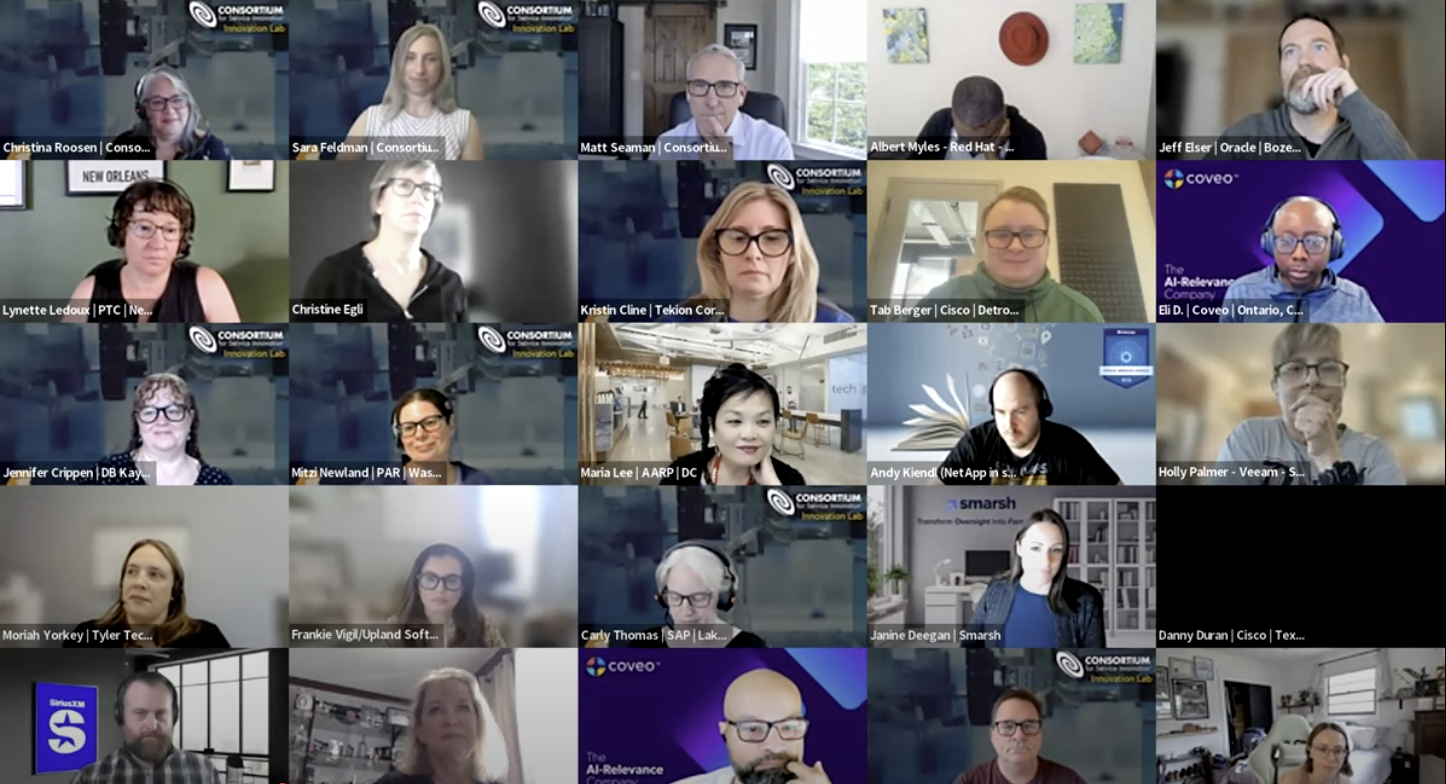
- What if customers own the customer experience?
- How is the current technology landscape changing how you think about engagement (both customer and employee)?
- Where do you feel you need the most help when talking about automation?
Consortium Members can find notes, slides, and key takeaways from the breakouts in the Member Only Wiki.
Artificial Intelligence and advanced automation remains top of mind for service organizations. It’s only become more clear as companies launch new AI capabilities that people, knowledge, and a focus on customer experience are foundational for AI initiatives. Sharing insights and real-world experiences allows us to create clarity and purpose as we strategically chart our course in this ever-changing landscape.
Stay tuned for updates, and visit Knowledge-Powered AI for more resources and Member experience with automation.