The Evolve Loop has become the most important part of KCS. This is where we can start to look at managing AI Agents and ensuring their outputs, knowledge creations, and how we mine that data for company value.
Matt Seaman
In April 2026, we announced Knowledge-Centered Success, a modernized evolution of the KCS methodology, previously known as Knowledge-Centered Service. This update marks a strategic transition from a support-focused model to an enterprise-wide framework designed to better integrate with artificial intelligence and automation.
KCS provides a methodology and set of practices for consistently capturing information in a way that is both structured enough to be useful, and dynamic enough to suit a rapidly changing environment.
This iteration should feel natural and comfortable to people who know the methodology and it should feel intuitive and accessible to people who are new to it.
Watch the replay or read highlights below about strategic shifts in methodology, the role of AI, plans for additional resources, and an updated roadmap for practitioners.
Webinar Replay
From Service to Success – A New Era
The evolution from KCS v6 (Knowledge-Centered Service) to Knowledge-Centered Success reflects a shift toward making the methodology more universally applicable to any knowledge-intensive environment. Consortium Members have shown measurable results when moving beyond just service and support to an enterprise-wide model.
A major theme of this update is understanding the intent behind the KCS Practices so humans or AI can enable the desired results. By grounding practices in their underlying purpose, organizations can better leverage new tools and AI automation to handle patterns and trends while humans focus on managing ambiguity and making meaning.
This shift is an exciting moment reflecting that the KCS model is an enterprise-wide framework for Knowledge Management and fills a fundamental need as automated agentic services become a reality.
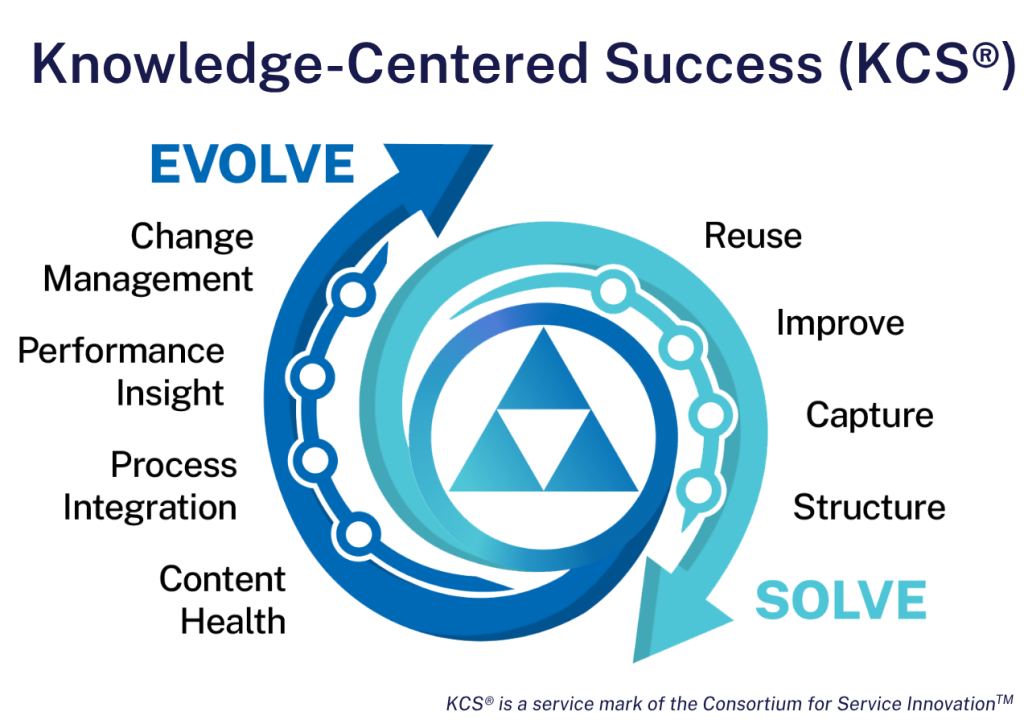
Methodology & Double Loop Updates
A reordered Solve Loop prioritizes knowledge reuse, and renamed practices in the Evolve Loop emphasizes organizational change management and performance insights.
- Reuse First Approach: The layout of the Solve Loop has shifted to start with Reuse, followed by Improve, Capture, and Structure. Starting with Reuse emphasizes that the primary goal is leveraging existing knowledge and helps avoid the misconception that every interaction must result in a new article.
- Performance Insight: Renamed from Performance Assessment, this practice now differentiates between the performance of people, the KCS program, and the organizational benefits gained.
- Change Management: Renamed from Leadership and Communication, it better acknowledges that KCS is a system requiring continuous care and feeding.
- Knowledge Optimization: A new technique under Content Health designed to help organizations identify and act on what’s being learned as soon as possible. (Knowledge Domain Analysis is an important part of Knowledge Optimization.)
These shifts ensure that the methodology remains universally applicable for any modern organization managing high-density information environments.
As a digital transformation strategist I LOVE seeing change management so clearly called out now as a priority in these loops!
Jason O’Donnell
Systems Thinking
Understanding our organizations as complex systems is getting more and more critical as we move to agentic, automated, self improving motions across the enterprise. How do multiple AI Agents interact with each other, how do they interact with people, and when and how do we know the best channel of engagement? Approaching these questions through the lens of systems thinking helps build sustainable approaches.
Complex vs. Complicated Systems: The new content highlights the relevance of the Cynefin model. It helps practitioners distinguish between complicated systems (direct cause and effect) and complex systems (like organizations and AI) where experimentation and testing are required to understand connections and make change stick.
Roadmap for Practitioners
- Certification Status: KCS v6 certifications remain valid. There is nothing about KCS v6 that is no longer relevant; the new version is an evolution of terminology and focus.
- Future Dates: New certifications and bridge exams for existing practitioners are expected to be released in April 2027.
- New Resources Available Now: the updated Practices Guide, a new KCS Coach Reference Guide, and a guide for Measuring Self-Service Success.
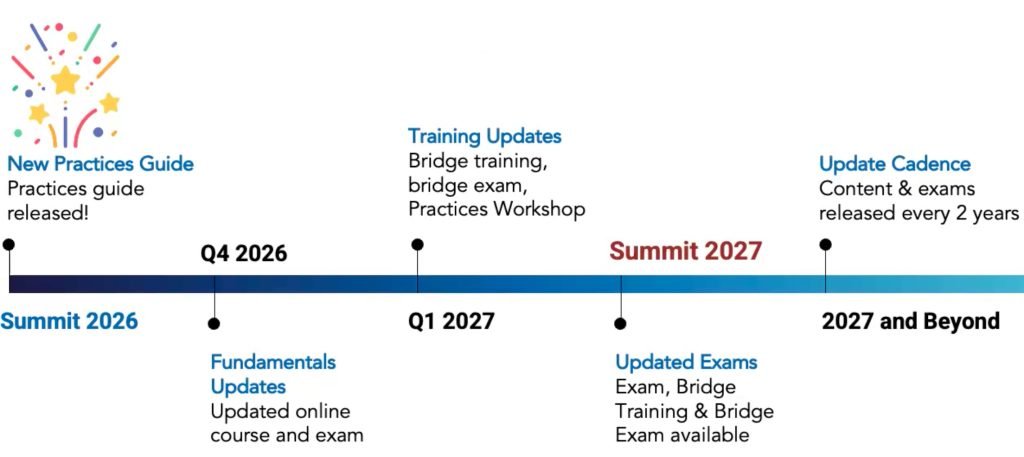
Resources Shared
As the KCS Practice of Improve teaches: reuse is review. We encourage practitioners to explore and provide feedback!
In the Digital Library
- Knowledge-Centered Success Practices Guide
- What’s New in Knowledge-Centered Success
- Coach Reference Guide
- Measuring Self-Service Success
Additional Resources