For the most recent guidance on AI, visit the AI and Knowledge overview page.
Solid Knowledge Management has emerged as a nonnegotiable prerequisite for effective AI in Service and Support environments. Specifically, Knowledge-Centered Service (KCS) practices create the continuously improved, validated knowledge that AI systems need to generate reliable outputs.
In other words: AI outcomes are only as good as the knowledge it pulls from. And for AI to scale responsibly, you need trusted content, consistent structure, and clear workflows for curation and reuse.
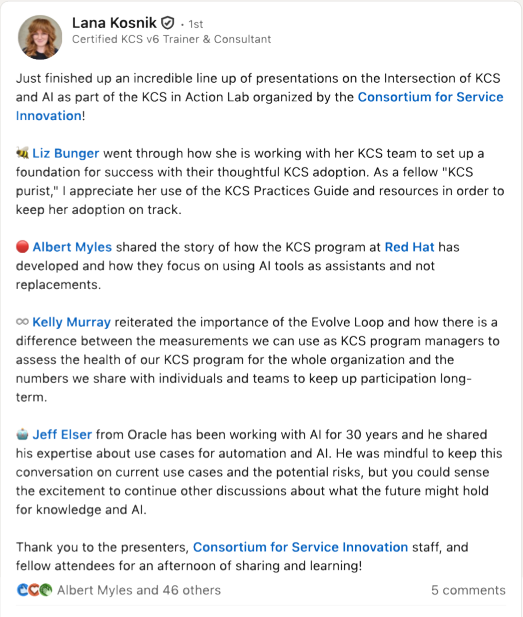
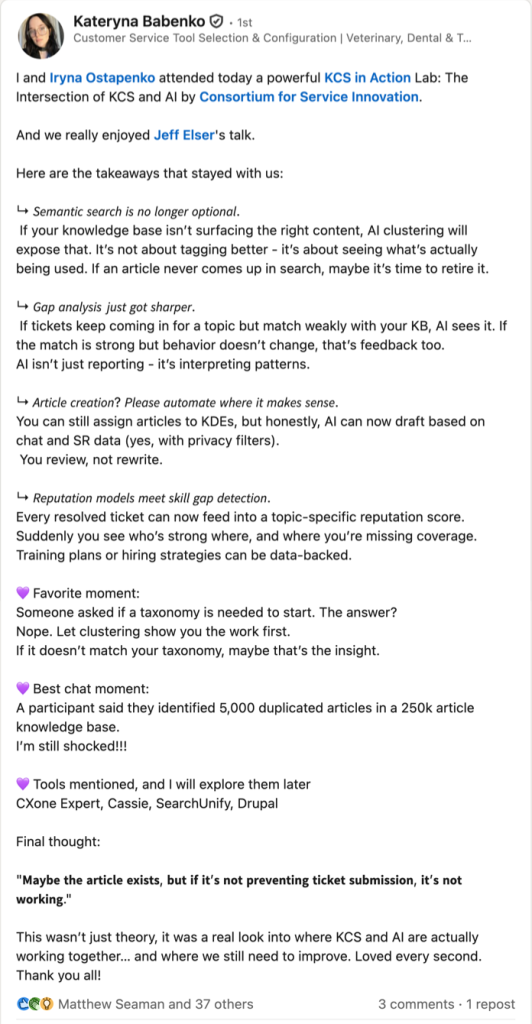
We hosted KCS in Action Lab: The Intersection of KCS and AI because getting the fundamentals of KCS right is essential before introducing AI. The sessions covered a comprehensive look at adoption planning, the multifaceted role of the Evolve Loop, and how AI can enhance a solid KCS foundation.
With 184 folks registered from 102 different companies and an energetic Zoom chat, we know this topic is relevant to many organizations navigating KCS and AI transformations!
Event recordings are included for current Consortium Members (login required) or available for purchase (please contact events@serviceinnovation.org).
KCS Challenges
At event registration, we asked: What part of KCS has been most challenging?
The most common answers?
- Adoption & Engagement – Getting individuals, teams, or the organization to embrace KCS.
- Leadership & Culture – Shifting mindset, culture, and leadership alignment.
- Coaching & Program Maintenance – Sustaining KCS programs through coaching, time, and prioritization.
- Content & Knowledge Practices – Knowledge creation, quality, and maintenance.
- Tools, Metrics & Infrastructure – Systems, measurement, and cross-functional dependencies.
While it’s always tempting to start with AI (so new! so shiny!), we also need to focus on what makes AI use cases actually effective.
The day was organized in the way Consortium Members have been successful in their AI implementations: starting with a solid KCS foundation, applying what’s been learned in the Evolve Loop, and then exploring use cases for automation and AI.
Session 1: KCS adoption done right is AI readiness
Liz Bunger from Vertex did a deep dive into how her team built a thoughtful, well-structured KCS adoption strategy—with real cultural change to match. You can’t bolt AI onto a shaky knowledge foundation and Vertex’s experience showed us how to truly embed KCS in how people work and think.
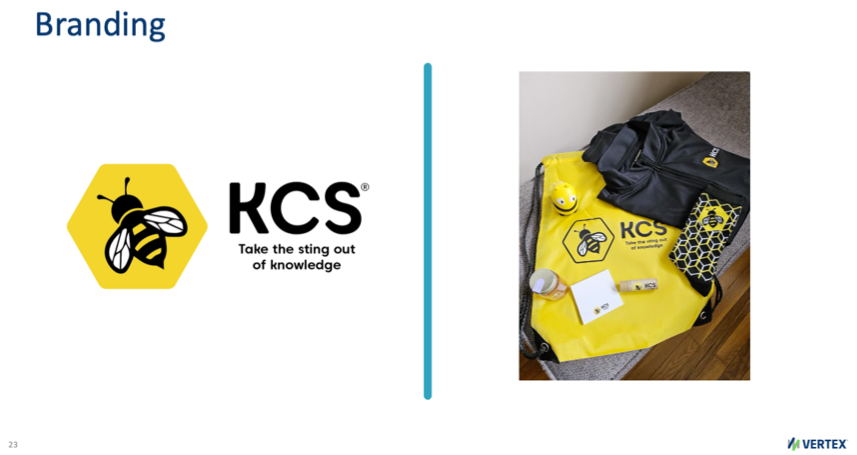
From robust communication plans and leadership training to bee-themed branding and a peer coaching model, Liz demonstrated how building the right habits early fuels sustainability—and ultimately, better data inputs for AI and automation down the road.
Key Takeaway: A strategic framework aligned to company goals gives KCS staying power—and talking points when priorities shift. At Vertex, they call their Strategic Framework “Why KCS” to make the intent as clear as possible.
Session 2: The Evolve Loop is where we find opportunities for improvement
Albert Myles from Red Hat and Kelly Murray from the Consortium for Service Innovation shifted the focus to what happens after you’ve launched. They showcased that iterations and even refreshes indicate a living KCS system.
Red Hat’s story emphasized building the infrastructure and leadership engagement needed to support long-term evolution, including the move to AI-supported quality indexing and content gap analysis.
“Treat large language models like really smart interns—helpful, but not infallible.”
Kelly shared a practical lens on the Evolve Loop: start small, start early. A few minutes reviewing your top-viewed and top-attached articles can yield powerful insight. Consistent curiosity about knowledge performance should be a habit, not something to add on down the road.
Key Takeaway: The most resilient programs are built for iteration, not perfection. AI-enabled tools can enhance productivity and scale up benefits only if you’ve built shared trust in the vision and good KCS habits.
Session 3: AI use cases to leverage or enhance KCS Practices and outcomes
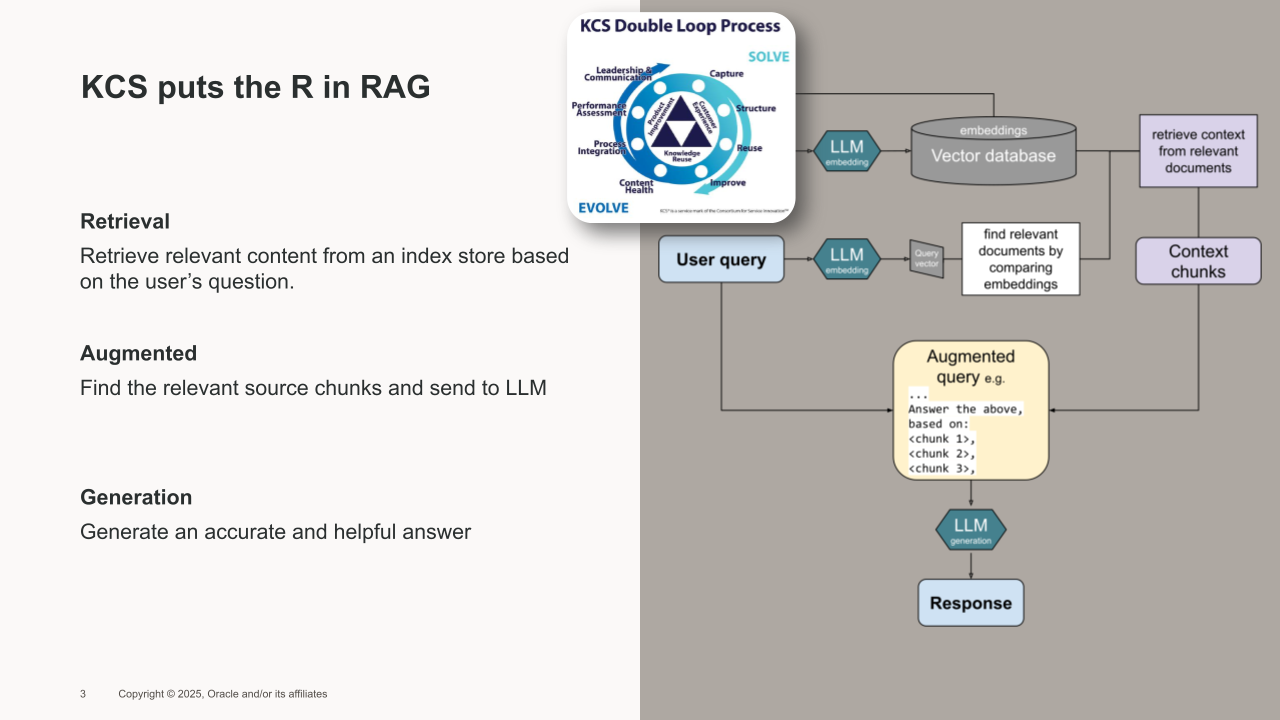
Jeff Elser from Oracle connected the dots with a walk-through of concrete, achievable AI use cases anchored in what KCS already enables when done well.
Use Cases Covered:
- Semantic Search
- Question Answering
- Chat/Service Request Summarization
- Machine Translation
- Response Generation
- Article Generation
- Duplicate Detection
- Smart Compose
- Generate from Flag It/Customer Feedback
- Gap Analysis
Key Takeaway: KCS + AI still equals KCS. The quality and structure of knowledge content directly impact AI effectiveness
Evolving Together
As we’ve heard from dozens of organizations committed to KCS adoption and AI experimentation, building and sustaining knowledge-powered customer engagement requires revisiting the basics while layering on enhancements.
We learned as much from our presenters as we did from the vibrant knowledge-sharing in the chat—everyone who participated added to the takeaways.
Event recordings are included for current Consortium Members (login required) or available for purchase (please contact events@serviceinnovation.org).
Let’s keep learning together. Please join us for another event soon!